d.velop's Digital Files
Businesses and organisations rely on d.velop digital files.




How do digital files work?
Boost productivity with digital files
With digital files, you always stay in control of your information – GDPR-compliant and fully traceable. Employees can quickly find content, provide instant answers, and handle processes transparently and intuitively. Automated workflows ensure error-free operations and increase productivity across the entire organisation.
Simple filing and fast search
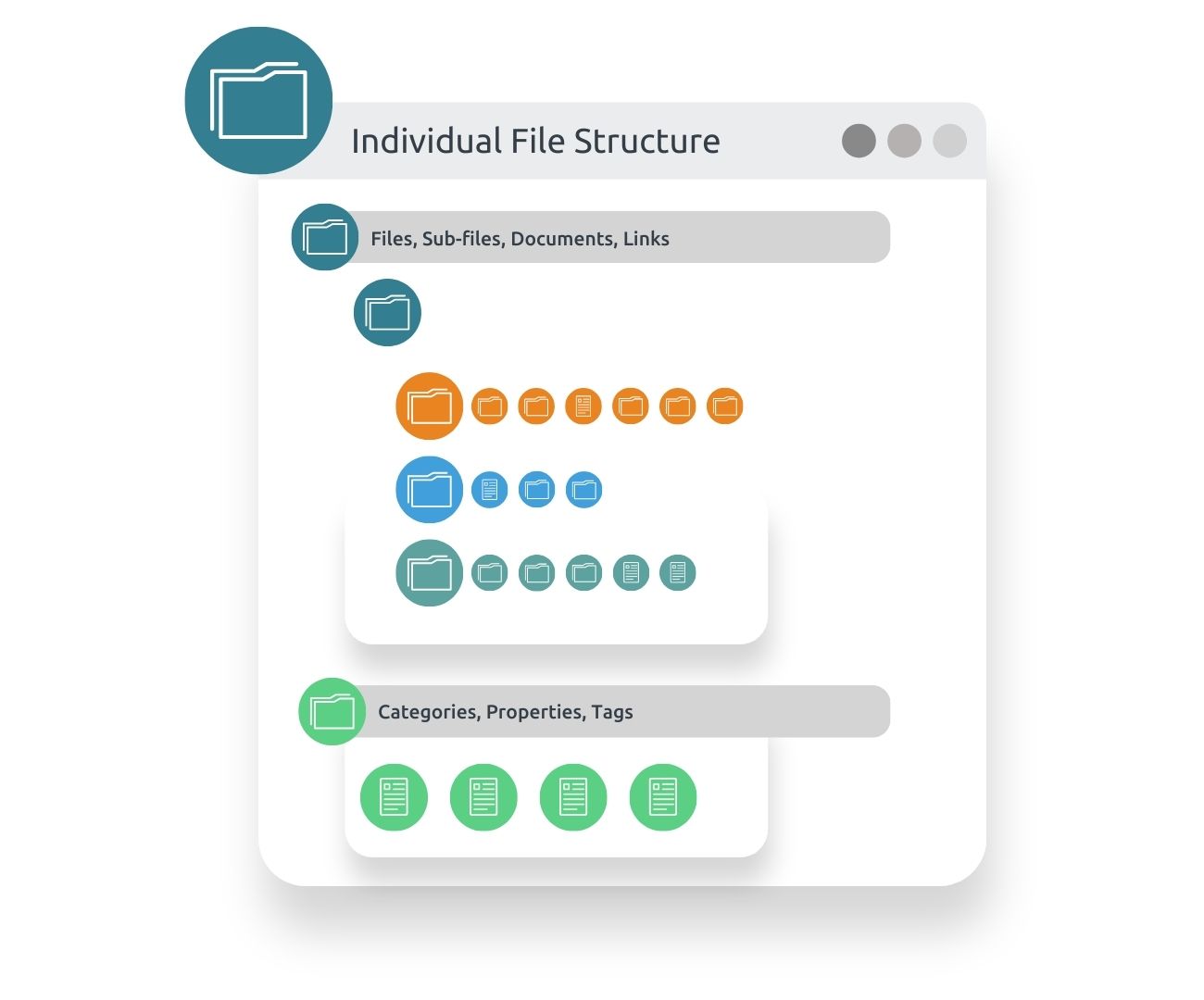
Thanks to customised file structures, documents are automatically sorted based on extracted properties and stored in the digital file. This makes all information easy to find and saves valuable time.
- Automatic assignment to existing or newly created files
- Intuitive search – all files and documents at a glance
GoBD-compliant and audit-proof archiving
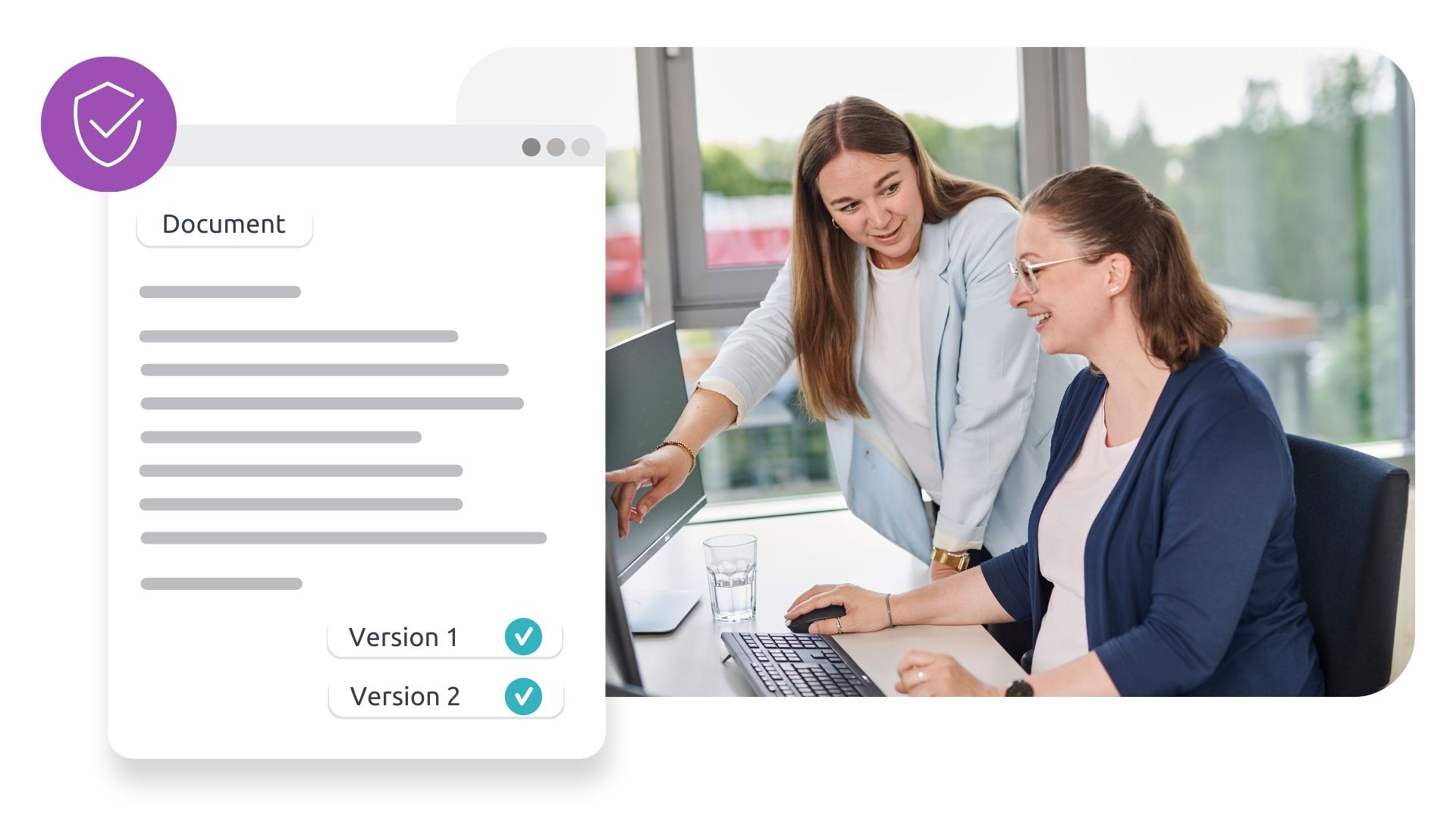
Immutable and traceable recording, indexing, storage, retrieval and reproduction of electronic documents in accordance with GoBD requirements. This ensures secure, audit-proof archiving.
- Compliance with legal requirements and retention periods
- Long-term availability of file formats
Flexible permissions management for greater security
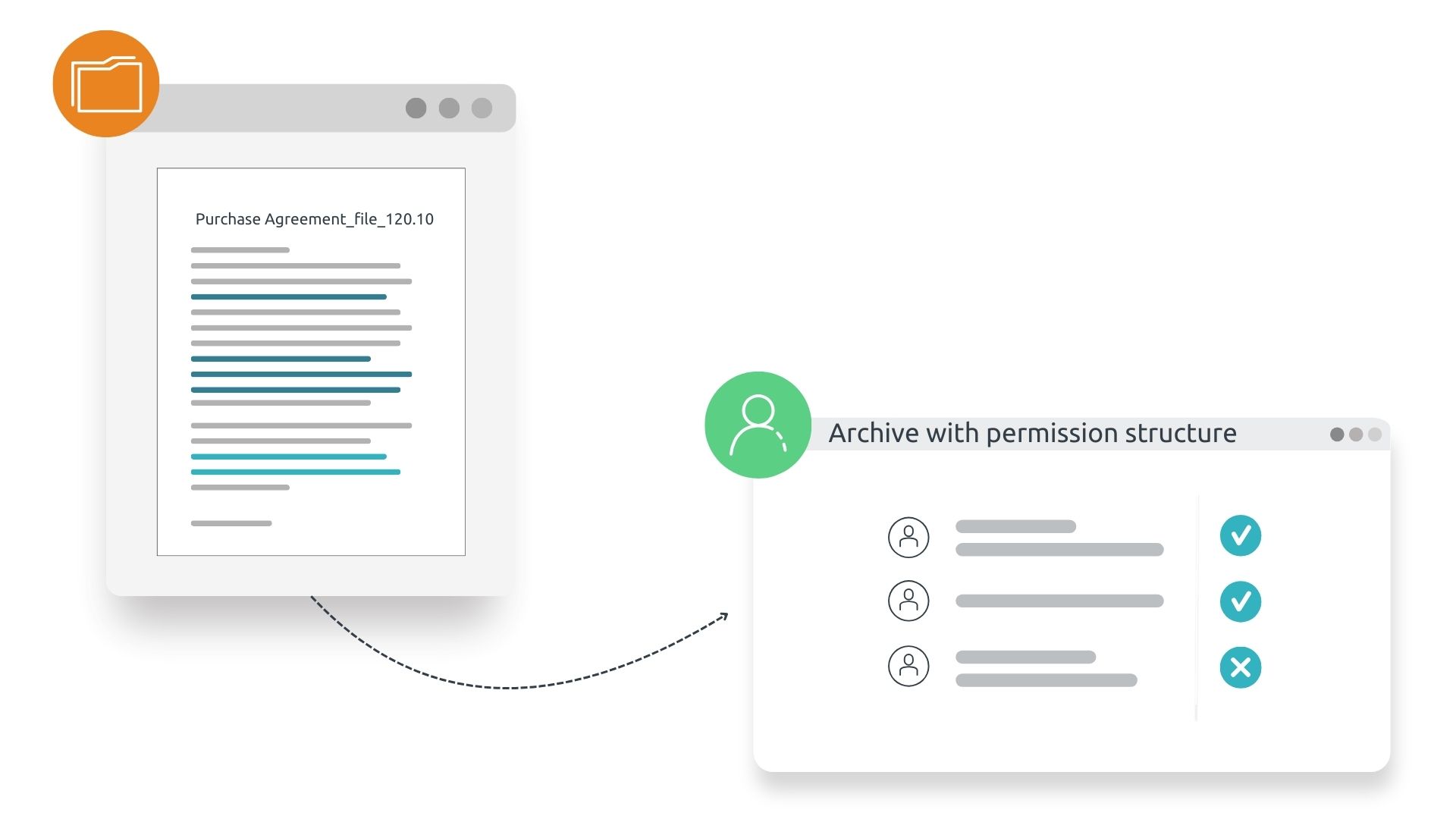
With a granular rights concept, administrators can define specific access rights for groups, ensuring that only authorised employees can access sensitive files – enabling secure, cross-location working.
- Customised rights concept protects against unauthorised access
- GDPR-compliant working – enhanced security for confidential information

Digital File ProjeCt guide
A Successful Rollout of Digital Personnel Files in Three Phases
In the project guide “A Successful Rollout of Digital Personnel Files in Three Phases”, you will learn the process of introducing digital personnel files – from the preparation phase to implementation and establishment in the company.
After 17 pages of valuable reading, including practical tips and checklists, you will be ready to start implementing digital personnel files in your company!
How do you integrate digital files?
Integrate d.velop software seamlessly into your existing systems.
A document management system including digital files must fit smoothly into your system landscape – this is the only way to avoid media disruptions. With d.velop, you benefit from proven integration expertise, confirmed by the Gartner Magic Quadrant for Content Services Platforms – whether ERP, CRM or other leading applications. Below you’ll find the most popular integrations and interfaces. Simply click to learn more!
Was die Bedienbarkeit angeht, vergleiche ich die digitale Personalakte der d.velop AG gerne mit Apple, die Bedienung geht intuitiv und einfach von der Hand.“

Which digital files are most popular?
The most popular digital files
Personnel File
The digital personnel file accelerates HR processes within the company, ensures transparent workflows, and improves the ability to provide information.
Electronic Patient Records
With the Electronic patient records, documents and test results are available in a clear manner at any time and from anywhere.
Electronic File
Based on our established E-Government filing system, the eAkte seamlessly integrates into various specialised procedures of public administration.
Project File
With the digital project file, you can manage all documents directly in a digital archive in a central location. Users have access to project-related documents from anywhere.
Which digital file do you need?
Your digital file tailored to your needs.
Digital files can be created for all requirements, industries and use cases. Their applications are diverse – from order files to approval files. d.velop customers use standardised files for the following scenarios, among others:
The digital resident file collects and archives all data and documents relating to residents of a social care facility in one single file.
All details of an order are centrally available at any time in a digital order file for authorised employees, ensuring swift processing.
The digital customer file stores all information and contracts relating to a customer in one central location, making them digitally accessible at all times.
With the digital production file, all relevant information such as bills of materials and construction plans can be stored in an easily accessible way for manufacturing.
Whether delivery notes, quotations or other supplier-related information: a digital supplier file consolidates all relevant details in one central place.
By using a digital machine file, operating manuals, spare parts catalogues and maintenance logs are always accessible.
A digital product file brings together all stages of the product lifecycle: from the initial idea and procurement through to the user manual.
The digital complaint file gives you an overview of all information relating to a complaint, including documents, images and emails.
The digital contract file helps you keep track of all deadlines associated with a contract. Structured storage and an authorisation concept provide additional security.
Security of Digital Files
Stay on the safe side with digital files.
With a sophisticated, granular permissions concept, you ensure that only authorised employees can view and edit files and documents. Especially when dealing with confidential data such as personnel files or contract files, digital file management guarantees security and compliance with statutory retention requirements.
Traceability
- Detailed and complete logging of all changes
- Document versioning
- Quick response in the event of an audit
Compliance with legal retention requirements
- GoBD-compliant working practices
- Audit-proof archiving
- Adherence to retention periods and proper deletion
Access control through permission management
- Centralised permission management
- Protection against unauthorised access
- Enables GDPR-compliant working
News & Resources
Digital files explained in detail.
Digital credit file: DZ BANK success & smart credit processes with IDP and AI

How and why DZ BANK introduced a digital credit file and how AI-driven technologies such as Intelligent Document Processing (IDP) help to make credit applications smarter is what you’ll find out in this blog article.
Rolling out digital project files for machines: OPTIMA packaging group

Customised production involves complex projects with a variety of specialist departments: At the OPTIMA packaging group, digital project files help to store information centrally and in a structured way.
File Management: Definition, Tips, Limits and Alternatives

Discover what file management really means, its limitations, and why a Document Management System (DMS) is the smarter alternative.
A Successful Rollout of Digital Personnel Files in Three Phases

In the project guide, you will learn the process of introducing digital personnel files – from the preparation phase to implementation and establishment in the company.
FAQ
Frequently asked questions and answers on the topic of digital files
A digital file is part of an electronic document management system that digitally stores, manages, provides documents for processing, and shares them. It replaces traditional paper files, enabling quick and legally secure access to all relevant content.
The digital file from d.velop enables a variety of functions and workflows that significantly facilitate document management. This includes, among other things, fully automatic classification of content so that it can be automatically moved to existing or newly created files. In addition, there are various types of files to optimally address industry-specific needs, for example.
You can import your existing paper documents into the digital file either using scanning functions or by outsourcing the scanning process to an external company. The size of the company or the industry is not a factor in this regard. This way, you can completely do away with paper files and benefit from the advantages of an electronic document management system (DMS).
Yes, the digital file from d.velop includes comprehensive security features to protect the integrity and confidentiality of your data. This includes, among other things, the distribution of access permissions, granting employees access to specific documents that are relevant to them.
An eFile is an electronic file, particularly commonly used in public administration as a part of Document Management Systems (DMS). It replaces paper files and digitally provides documents and information. eFiles integrate seamlessly into the required specialised procedures and present the most important information directly in a clear manner on the digital file cover.
A comprehensive management of all construction-related documents can be achieved with a digital construction file. This electronic collection of various documents is available location-independent and can also be accessed on-site during construction, providing information about crucial decisions. Whether it’s plans, drawings, calculations, or assessments, all documents are consistently accessible.
Digital file management means that files and documents are not available in paper form but are instead electronically managed. This is done by organising the files through an electronic system, such as a Document Management System (DMS). With a DMS, digital files can be easily shared, collaboratively edited, and archived securely without much effort. This makes file management more organised, reduces the risk of losing documents, and minimises the error rate.
The advantages of a digital personnel file include easy application, the linking of documents and files, location-independent work, and reduced search effort. Additionally, the digital personnel file is more secure than a file in a physical filing cabinet.
Contact & Consultation
We connect data and people – And look forward to hearing from you.
Curious? We’d be happy to show you our software.
Simply request a live demo.