AI process automation
AI that understands your processes
From routine task to automated decision
In many organisations, qualified staff carry out the same steps manually every day: checking documents, routing, approving and filing. d.velop process studio changes that. When combined with generative AI, it recognises triggers and executes defined steps automatically. It only involves your teams where a real decision is required. Processes run faster, more consistently and with significantly less manual effort, but your teams still retain control.
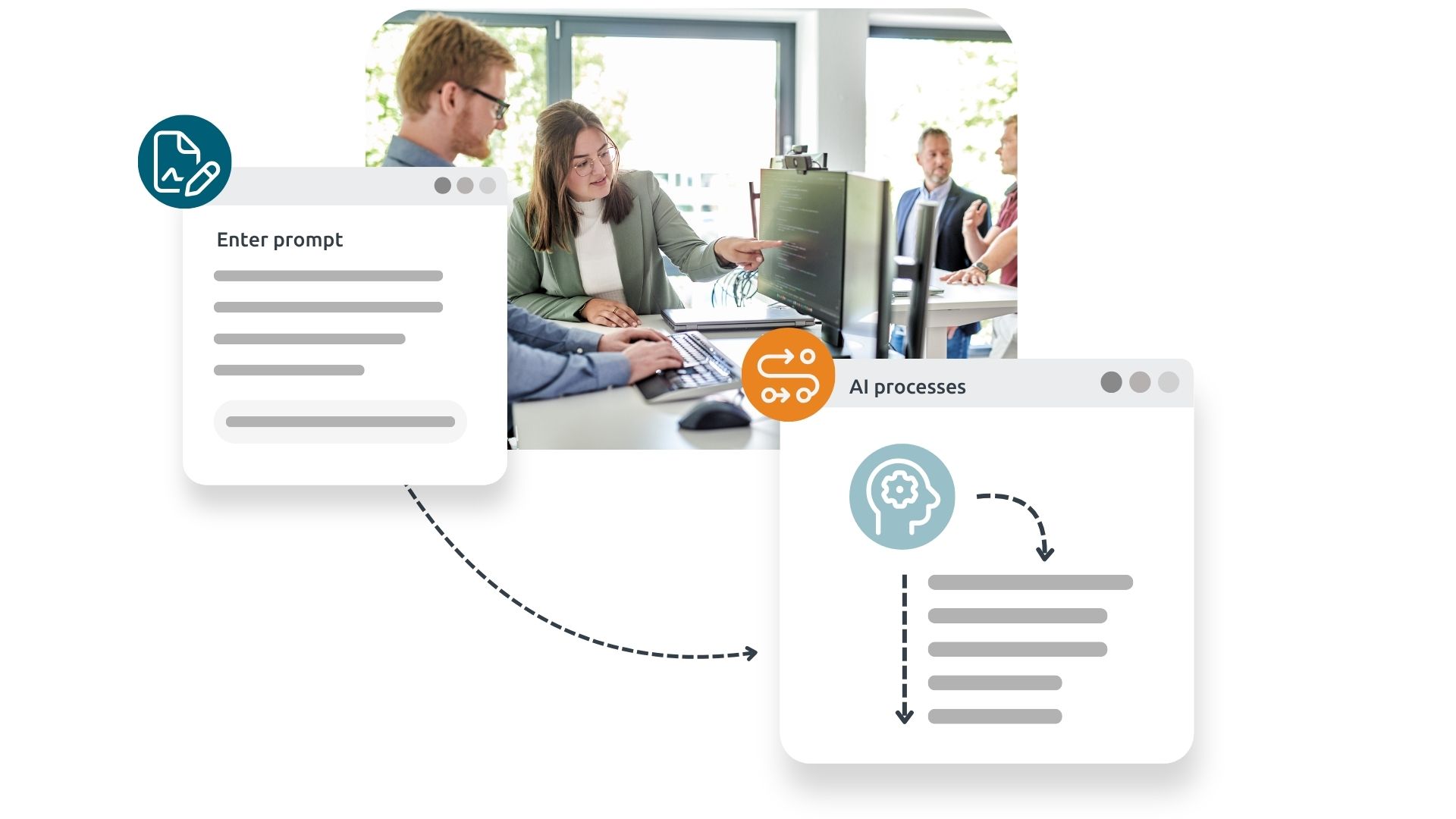
Control processes via prompt
With simple text inputs, you can assign tasks directly to AI in d.velop process studio – no programming knowledge or IT support is required.
- Delegate routine tasks via prompt
- Useable directly within your familiar working environment
- Ready to use for business departments with minimal onboarding effort
Routines that take care of themselves
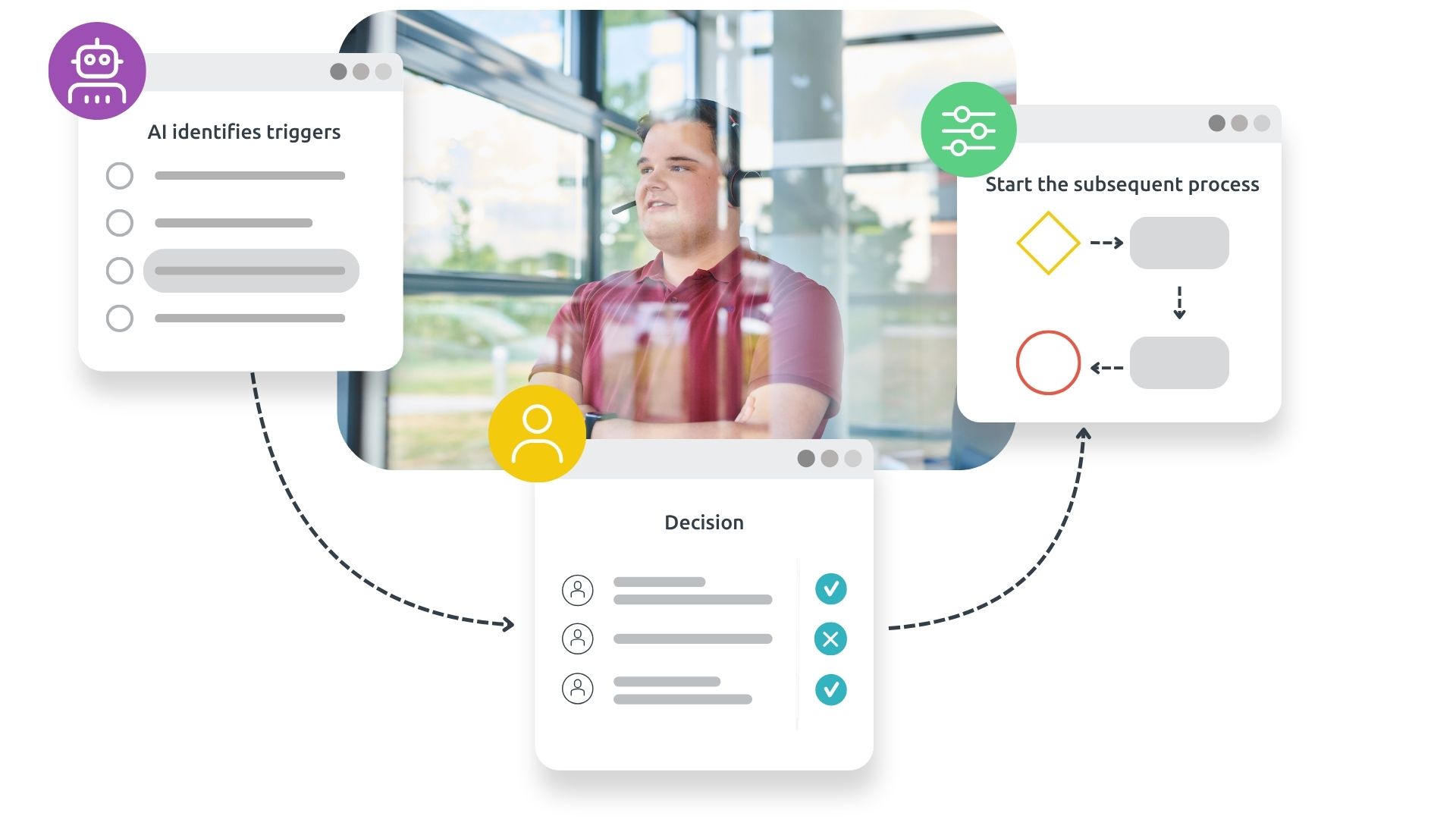
AI recognises triggers, executes follow-on processes and involves your staff precisely when a real decision is needed.
- Process triggers are recognised automatically
- Rule-based routing without manual intervention
- Process logging is transparent
European data hosting and full control
All AI-supported processes run on a secure infrastructure with European data hosting, providing transparency and independence from individual providers.
- European data hosting
- Free model choice, no AI vendor lock-in
- Complete audit trail for every process step


Blog Post
IT Trends 2026: From Vision to Responsibility – Where Agentic AI Meets Digital Sovereignty
In 2026, the defining shift in IT is no longer about the speed of new AI models, but about the maturity with which organizations apply them. d.velop CTO Nico Bäumer identifies three trends shaping this year: agentic AI, which moves beyond rigid workflows toward goal-oriented systems that keep humans in control; vertical AI, where domain-specific models trained on structured business data replace generic solutions; and digital sovereignty, which has become a strict architectural requirement for any responsible AI strategy. Together, these three developments form the foundation for sustainable, AI-driven transformation in 2026.
Business departments model processes themselves
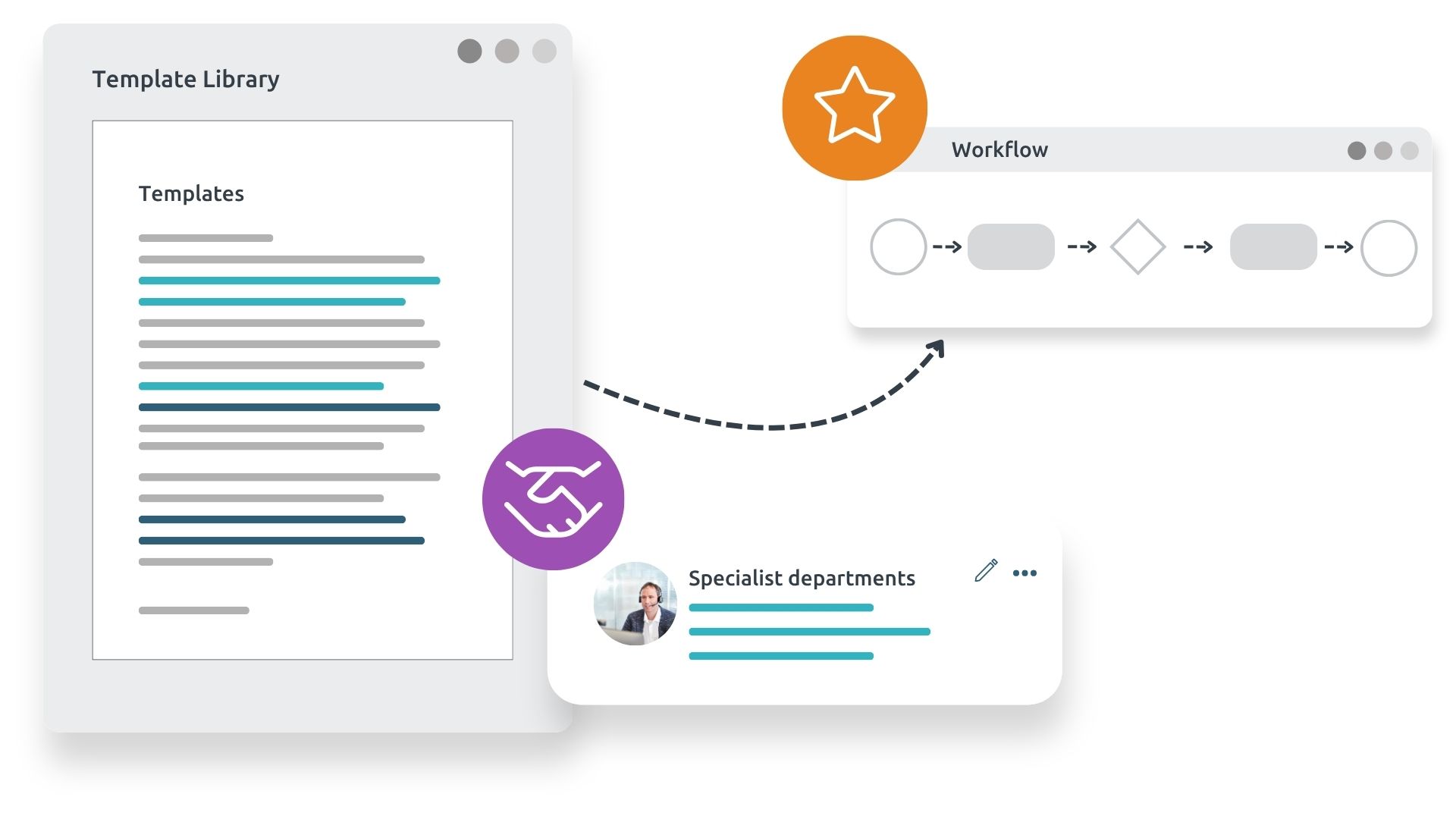
With the low-code approach, business departments model simple processes directly in d.velop process studio. Ready-made templates from the Template Library ensure the first process is up and running quickly.
- Low-code process modelling based on BPMN 2.0
- Ready-made community templates available immediately
- Business departments and IT collaborate as equal partners
Forms, data and workflows in a single flow
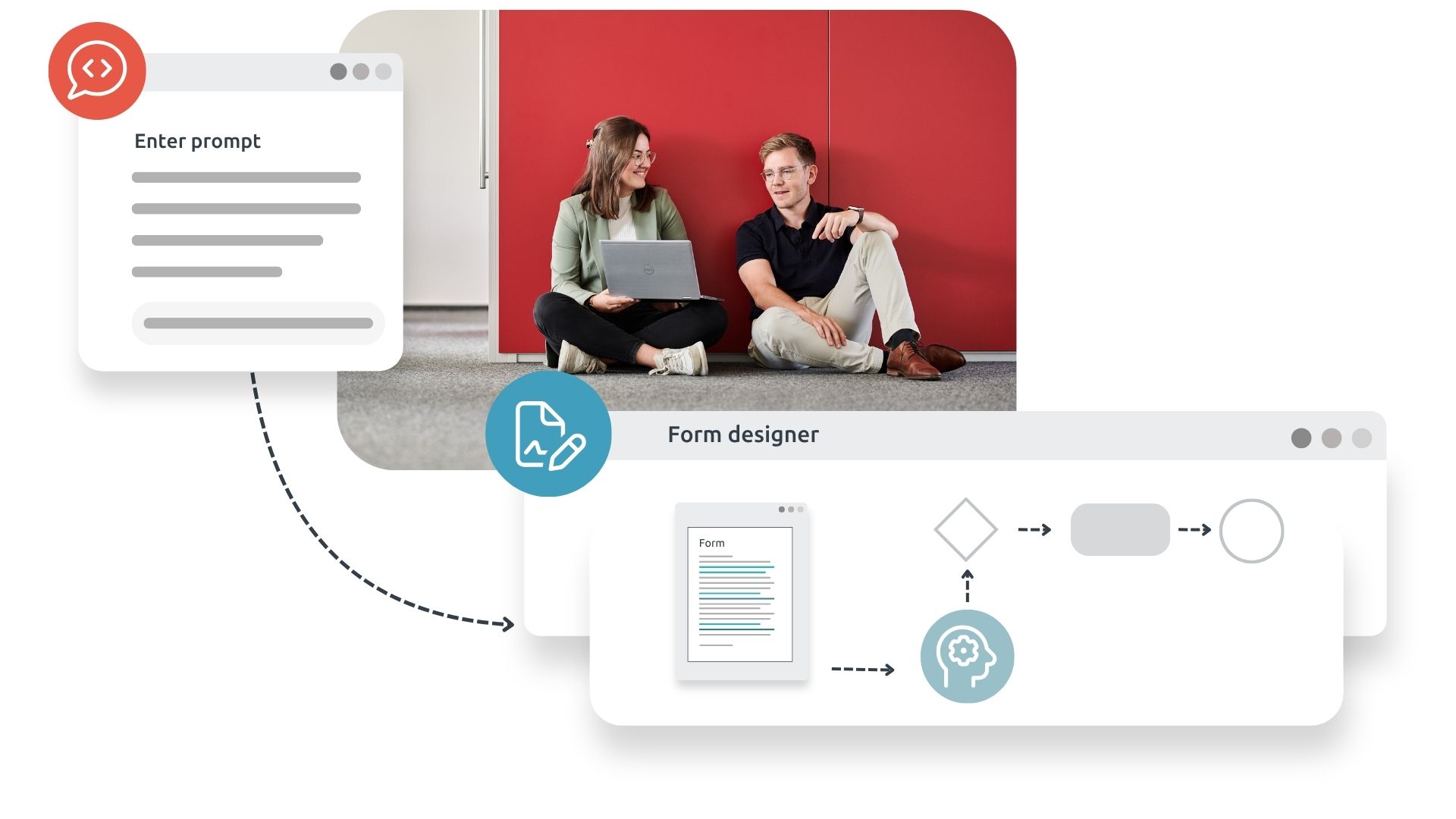
Individual forms are created via prompt and drag & drop and seamlessly embedded into existing workflows. Data flows automatically to the next step – no manual transfer is required.
- Create forms via drag & drop and prompting
- Automatic data transfer between process steps
- Media-break-free workflows from start to finish
Monitor processes and identify bottlenecks early
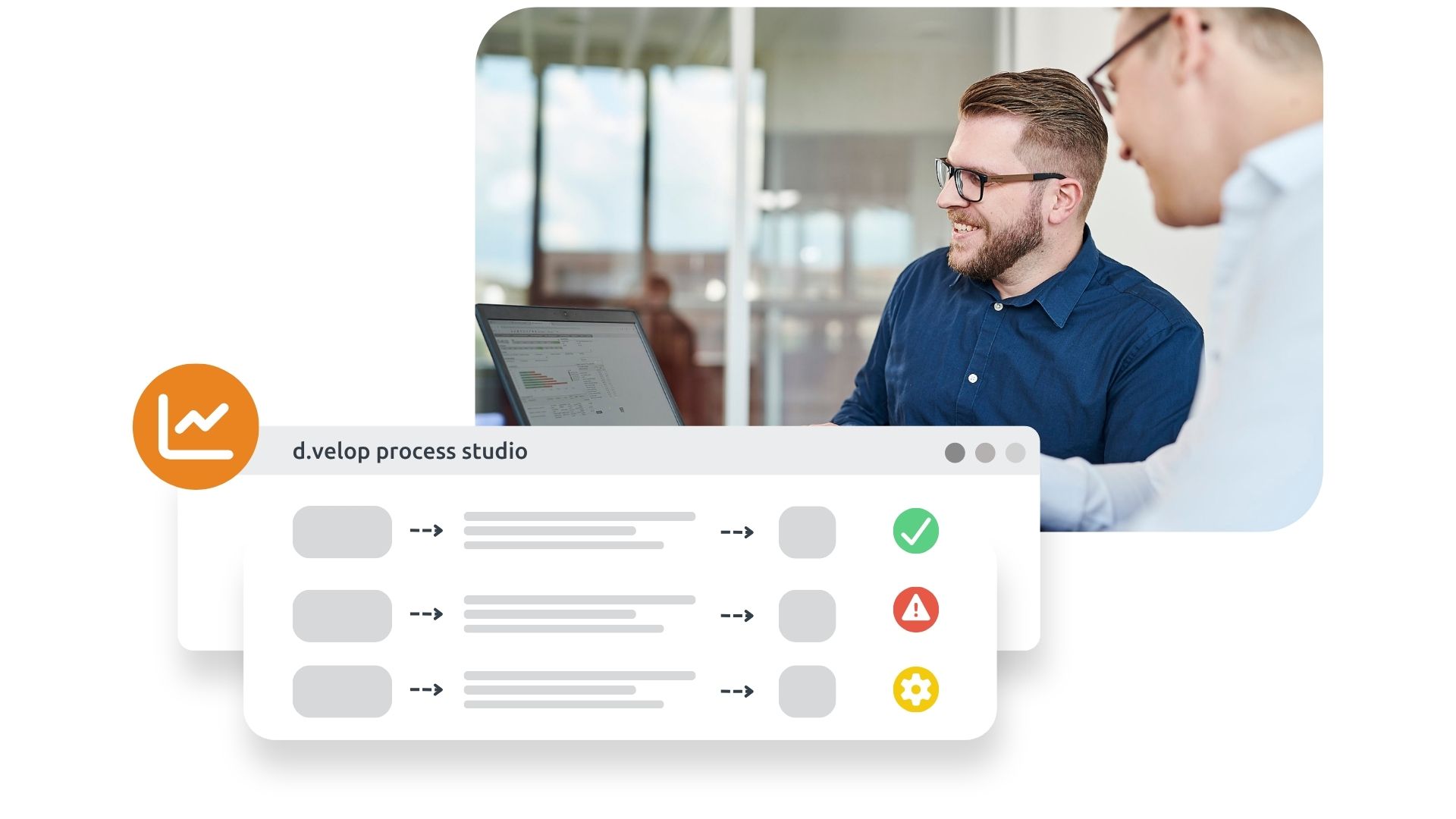
The integrated monitoring in d.velop process studio shows the status of every active process in real time. Any emerging errors can be seen early and resolved directly during live operation.
- View process status in real time at any point
- Identify errors early and address them precisely
- Make adjustments during live operation without interruption
AI process automation
in practice
How to map approval processes using AI.
Approvals that previously passed through multiple hands via email run fully automated with d.velop process studio. AI recognises relevant documents, routes them to the responsible parties, and closes the process in an audit-proof manner.

How to automate your onboarding process.
From the employment contract to system access provisioning, onboarding processes can be mapped fully digitally with d.velop process studio. Forms, tasks, and documents flow automatically through the right stages, so new employees can start productively from day one.
Hoe implementeer je een geautomatiseerd proces voor budgetgoedkeuring?
Discover how easy it can be to implement the budget approval process efficiently with d.velop process studio. Learn step by step how to digitise and automate the entire workflow to save valuable time and reduce errors.

How to set up a contract review process.
Learn how to set up an automated contract review process based on § 2b of the German VAT Act. A process is configured to automatically review contracts and notify the initiator when tax-relevant information is found.

The perfect trio of process digitalisation
Workflows, document management &
AI automation
Intelligent process automation begins where workflows, documents, and AI work together seamlessly. With d.velop process studio as process management software, combined with a document management system (DMS), you digitise and automate your business processes end to end – from document capture to workflow-driven decisions. AI-powered process automation with d.velop pilot allows recurring tasks to be initiated via prompt, information to be processed automatically, and decisions to be prepared intelligently. The combined approach delivers:
- Fewer media breaks
- Greater transparency
- Reduced error rates
- Structured collaboration
- Consistent workflows
- Faster processes
Integraties
Overcome system boundaries,
design seamless processes
Met de d.velop process studio kunt u systeemgrenzen doorbreken. Dankzij de krachtige REST API kunt u bijvoorbeeld formulieren automatisch vullen met gegevens uit systemen van derden. Bovendien kunt u met de Scripting Engine systemen van derden in uw workflows integreren, en maakt de Microsoft Power Platform-connector de integratie van andere systemen, zoals Microsoft Teams, in uw procesbeheertool mogelijk.






Nieuws & Bronnen
Process automation in focus
Digitale verlofaanvraag, snel en eenvoudig te implementeren

In dit blogartikel leest u hoe het proces voor het aanvragen van verlof in elk bedrijf snel en eenvoudig kan worden gedigitaliseerd.
AI-gestuurde documentverwerking voor de volledige levenscyclus van documenten

In dit document van één pagina maken we u wegwijs in het concept van IDP, belichten we de belangrijkste voordelen ervan en geven we een praktisch voorbeeld van hoe documenten automatisch kunnen worden vastgelegd, geclassificeerd en geïntegreerd in uw workflows.
Van papierchaos naar procesoptimalisatie met AI-gestuurde intelligente documentverwerking

Zoeken, sorteren, typen: dit soort traditionele processen zijn tijdrovend, arbeidsintensief en foutgevoelig. Hier komt Intelligent Document Processing (IDP) om de hoek kijken. Het combineert AI-gestuurde documentanalyse, geautomatiseerde documentworkflows en intelligente tekstherkenning.
Procesautomatisering met AI: sneller, minder fouten, slimmere beslissingen.

Bedrijven over de hele wereld staan onder enorme druk om hun processen efficiënter, schaalbaarder en foutloos te maken. Intelligente procesautomatisering – de combinatie van kunstmatige intelligentie (AI) en moderne workflowautomatisering – biedt enorme mogelijkheden voor alle bedrijven.
Veelgestelde vragen
Questions and answers on AI process automation
Process automation with AI means that recurring, rule-based tasks no longer need to be handled manually. AI-powered software recognises triggers in incoming information, executes the necessary process steps automatically, and involves staff only where a human decision is required. Specific tasks such as document classification, data extraction, and routing are handled by AI independently. In d.velop process studio, your teams retain full control over rules, exceptions, and approvals.
The right software depends on how deeply AI needs to be embedded in your processes and what requirements exist around data protection and integration. d.velop process studio combines classic process management based on BPMN 2.0 with state-of-the-art generative AI – GDPR-compliant with European data hosting. Business departments can model simple processes themselves using a low-code approach, without any programming effort.
Classic workflow automation follows fixed rules and predefined paths. AI-powered automation additionally processes unstructured information such as scanned documents, emails, or forms in various formats, recognises patterns, and makes context-based decisions. In d.velop process studio, both approaches can be combined: rule-based where reliability and traceability are critical, and AI-powered where pattern recognition and flexibility make the difference.
With the d.velop process studio, business departments can independently map and automate simple processes. The department describes the process in d.velop process studio and specifies which information is needed at which points. The IT administrator ensures that the required information from other systems is made available at the appropriate stages.
With the Template Library in d.velop process studio, the first process is often up and running within a few hours. For simple approval processes or standardised workflows, the low-code approach is sufficient — no implementation project required. More complex processes involving system integrations are planned and implemented together with d.velop, your own IT department, or one of the partners, tailored to the specific use case.
Yes and at d.velop, this is a deliberate design principle. AI primarily handles recurring, rule-based, and time-consuming tasks, in particular researching, collecting, and preparing decision-relevant information. Decisions that require context, experience, or accountability remain with people or are explicitly handed over for final review. d.velop process studio shows transparently at all times which steps run automatically and at which points staff are involved
AI supports process management primarily by automating recurring tasks, intelligently processing information, and creating workflows. In d.velop process studio, processes can be initiated via prompt, decision logic can be prepared, and forms can be created efficiently. This reduces the burden on staff and shortens throughput times.
In principle, all rule-based and document-centric business processes can be automated. Individual tasks or components of a process can also be automated without neglecting the rule-based process. These include, among others: invoice and approval processes, HR and onboarding processes, contract and review processes, retention and deletion periods, and service and approval workflows. The process management software ensures transparency, traceability, and efficiency.
d.velop process studio integrates into your existing IT landscape via standardised interfaces. The REST API allows forms to be automatically populated with data from ERP, CRM, or HR systems. The Microsoft Power Platform connector links additional third-party systems such as Microsoft Teams directly into your processes. d.velop has more than 500 integrations and a proven integration expertise, recognised in the Gartner Magic Quadrant for Content Services Platforms.
Pure workflow software controls individual sequences or task chains. Process management software goes further: it maps complete process landscapes, enables BPMN-based modelling, integrates document management, and supports the automation of complex business processes. d.velop process studio combines a workflow engine, process modelling, scripting, an integrated form designer, and AI-powered assistance in a single, holistic solution.
Demo AI process automation
Experience d.velop process studio with AI live.
Our experts will show you live how d.velop process studio automates your specific processes with AI. Book your personal software demo now and get started with your first use case.